Showing posts with label whirlow Hall farm. Show all posts

Friday, 12 August 2011

News - Iron Age Heritage of Sheffield Farm (Whirlow Hall)

Whirlow Hall Farm is a working farm on the western edge of Sheffield. Every year over 10,000 children visit it from inner city areas to learn about various aspects of agriculture. But on 19th July archaeological excavations began, marking the culmination of a community-orientated survey project carried out through spring and summer by local volunteers led by Archaeological Research Services.

A comprehensive field walking survey turned up an assemblage of over 1,000 artefacts, including flint tools ranging from the Mesolithic to the Bronze Age, and even evidence for Late Medieval manuring.
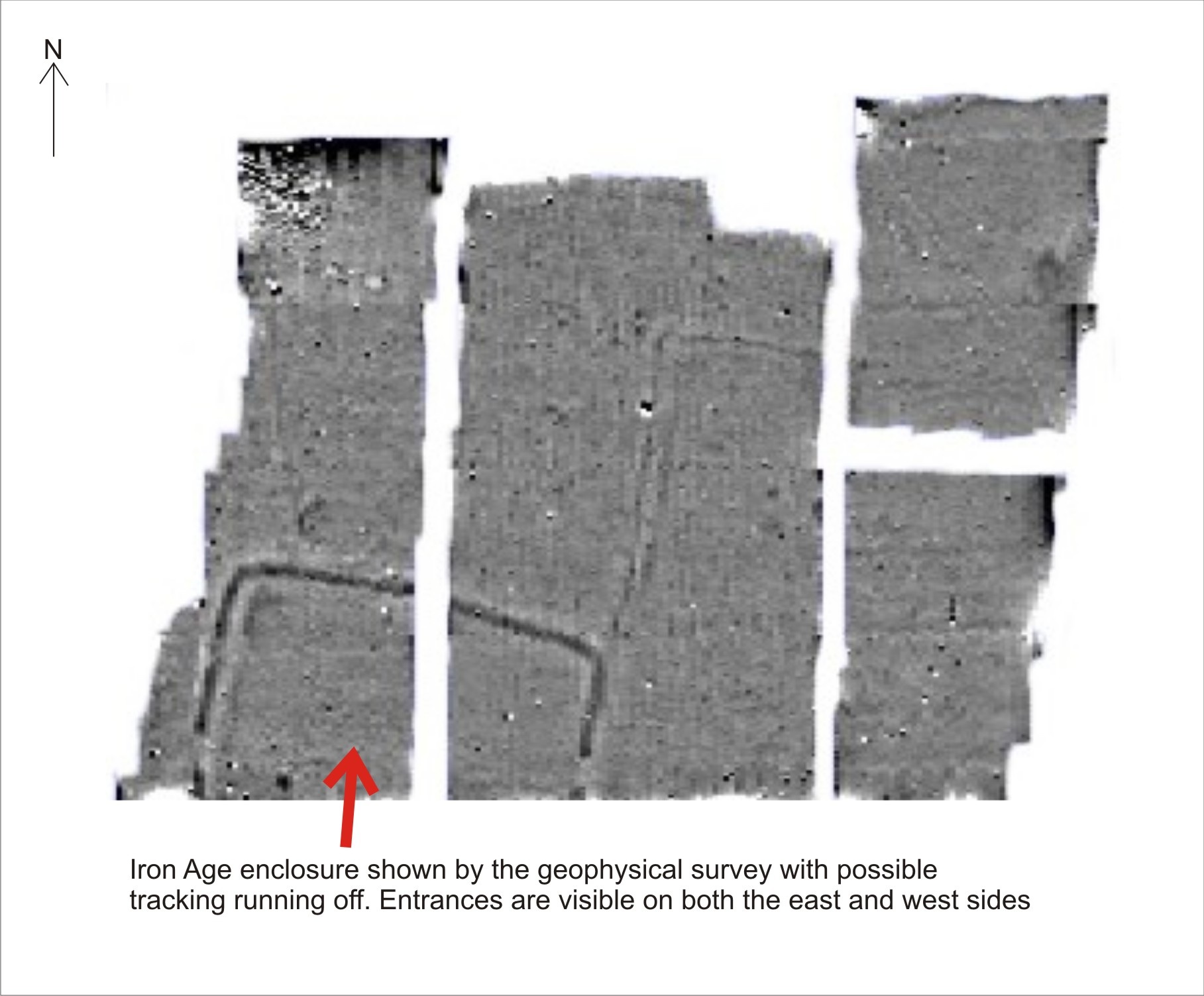
Yet the geophysical survey has caught the most attention. The results clearly show a rectangular ditched enclosure with opposing entrances to the east and west. It is believed to be Iron Age in date, and will form the focus of the excavation.

Karl Taylor of Archaeological Research Services said, ‘This discovery pushes back farming at Whirlow by at least 2,000 years and will provide new information on the early history of Sheffield’. As no farming settlements of this date have been found elsewhere within the city, this discovery could be highly significant.
Fieldwalking 003 small News: Iron Age Heritage of Sheffield Farm
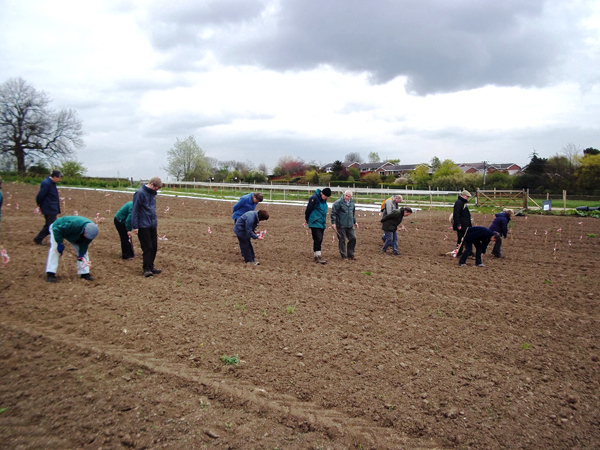
Volunteers fieldwalking for signs of Whirlow Farm’s past. Photo: Archaeological Research Services

The excavations begin during the Council for British Archaeology’s ‘Festival of British Archaeology’ and are certainly in the spirit of the event. Dorne Coggins, a volunteer said, ‘The project has given me a wonderful chance to experience a wide range of archaeological activities… and I can’t wait to take part in the excavation’.

The project will allow the Whirlow Hall Farm Trust to branch out, using the findings to create a programme of walks, talks, and a heritage trail. Jessika Sheppy of Archaeological Research Services hopes that these activities ‘will enable visitors and school groups to appreciate the history and importance of the site for many years to come’.- Jonathan Hutchings

from: http://www.archaeology.co.uk/news-features/iron-age-heritage-of-sheffield-farm.htm

Saturday, 6 August 2011

Dig - Farm dig sheds light on city’s Roman trade links (Whirlow Hall farm)

AT FIRST it seemed like many other archaeological digs, giving little more than a clouded glimpse into the past.

But the excavations have now provided a fascinating window on a Roman Sheffield that no one realised had ever existed.

Archaeologists who started the history project back in April in a field on the edge of Sheffield initially found traces left by Stone Age hunter-gatherers, but there were few surprises. Trenches yielded evidence of the foundations of medieval buildings and stone tools were also discovered.

However, the experts who arrived at Whirlow Hall Farm in the spring were soon to make a massive discovery when suddenly a whole new layer of history was unearthed. The decision to undertake a geophysical survey earlier this summer revealed what appeared to be a large, ditched enclosure.

Archaeologists told the Yorkshire Post at the time they suspected the site might be Iron Age or Romano-British. But yesterday they revealed that since then magnificent finds have confirmed the area is even more significant.

Speaking at the site, director Dr Clive Waddington said: “The realisation just came completely out of the blue. The enclosure is actually about 70 metres (230ft) square so it’s quite a big monument, and would have been home to a wide variety of activities.

“We have discovered Roman pottery and evidence of gatepost holders around the entrance which suggest it would have had large gates and would have been a big, complex site. The pottery we have discovered is from around Britain and there are also examples which would have been imported from Gaul, which is modern day France. This shows that the occupants weren’t just farmers but were also traders.

“The site lies alongside what was a packhorse route from Sheffield to Manchester, and the location of this farmstead suggests the route was also in use during the Roman period. It probably linked to a Roman road which ran from Manchester, to Hope in the Peak District and then down to Sheffield on its way to Doncaster.

“The people who lived here would have traded farm goods and produce with Roman travellers using the route. It conjures up a picture of the place being really busy and being used as a Roman trading post.”

Dr Waddington, of Derbyshire-based Archaeological Research Services, said the discovery was particularly exciting because at present there was little or no recorded evidence of this period in the Sheffield area.
Volunteers involved in the dig have also recently discovered what the experts believe may be Roman coins, but they have to be examined by specialists before a confirmation of their date can be made.

The archaeological project had been commissioned by the Whirlow Hall Farm Trust, a charity which runs the site as a city farm to encourage local children to learn about agricultural lifestyles and rural pursuits. Dr Waddington said that he had no idea that when it began that it would result in the discovery of such a “high status” and important Roman site.

About 100 volunteers have been involved in the dig so far, and although work on the first phase ended yesterday, it is now planned to extend the project, with further test pits planned for November. It is as yet unclear whether the people who lived on the farmstead were themselves of Roman origin or native Britons of the time although Dr Waddington said the evidence suggested they were Roman.

He said: “Initial assessment suggests the site dates from the second century AD, the period of Hadrian and Antoninus Pius, times when the Roman emperors were very interested in Britain. The discovery that the farmstead was so large and important came as a complete surprise because when you stand and look at this field there is nothing on the surface to suggest that there is anything like this.

“There have not been any Roman discoveries made anywhere in Sheffield for many, many years, and this is really helping to fill in that historical jigsaw and help flesh out what has been a poorly understood period.”

Dr Waddington said the latest discovery at has been a series of lead fragments, which suggest that there may also have been an industrial dimension to the site, which lies on the south-western edge of Sheffield.

Staff at the farm trust said that once the project was complete, all the findings would be used to create a heritage trail and a programme of heritage walks and talks.

From: http://www.yorkshirepost.co.uk/news/at-a-glance/main-section/farm_dig_sheds_light_on_city_s_roman_trade_links_1_3647879
Wednesday, 27 July 2011

Dig - Time team dig up the dirt: experts push back origins of farming in city’s history (Sheffield)

ARCHAEOLOGISTS working at a Sheffield farm have dug up a mystery – the remains of a settlement which could date back 8,000 years to the Iron Age.

The dig, aided by volunteers at Whirlow Hall Farm, has found a rectangular-shaped enclosure formed by a ditch.

It was revealed during a geophysical survey undertaken by a team as part of an ongoing Heritage Lottery funded project at the farm.

Karl Taylor, of Archaeological Research Services who carried out the survey, said: “The results of the survey show just how valuable geophysics can be as a tool for discovering archaeology that would have otherwise lain undetected.

“This discovery pushes back farming at Whirlow by at least 2,000 years and will provide new information on the early history of Sheffield.”

Excavations on the enclosure are now under way with volunteers and members of the public taking part alongside trained archaeologists.

The discovery could be hugely significant for Sheffield, as no farming settlements of this date have yet been found within the city.

The project is open to the public and volunteers have been involved since April.

They have so far been carrying out field walks, geophysical examinations of the terrain and a photographic survey of the historic farm buildings at Whirlow including the medieval cruck barn.

Volunteer Dorne Coggins said: “The project has given me a wonderful chance to experience a wide range of archaeological activities.

“It has really opened my eyes to what you can discover on your doorstep.”

The field walking resulted in the collection of over 1,000 finds, including flint tools from the Mesolithic and Early Bronze Age.

Archeologist Jessika Sheppy said: “The really exciting aspect of this project is that it is revealing the presence of human activity at Whirlow for over 8,000 years.

“This emerging story will enable visitors and school groups to appreciate the history and importance of the site for many years to come.”

On completion of the project, the findings will be used to produce a heritage trail and a programme of talks and walks detailing the history of the area, which will be made available to visitors to the farm.

The dig continues until August 5 and anyone interested in taking part should contact Jessika Sheppy at jessika@archaeologicalresearchservices.com or 01629 814540 to book a place.

Tuesday, 12 July 2011

Dig - Volunteers unearth evidence of Iron Age settlement in Yorkshire city (Sheffield)

Evidence of human activity dating back to Roman times has been found at a city farm as part of a volunteer-led archaeology study.

Experts believe the survey has unearthed remains of an Iron Age or Romano-British settlement at Whirlow Hall Farm in Sheffield, and the discovery has caused considerable excitement.

A rectangular enclosure formed by a ditch was revealed during a geophysical survey commissioned as part of a Lottery-funded project at the site.

Karl Taylor of Archaeological Research Services, which undertook the survey, said the discovery could be hugely significant as no other settlements of such an early date have been found within the city.

He added: “The results of the survey go to show just how valuable geophysics can be as a tool for discovering archaeology that would otherwise have lain undetected. This discovery pushes back farming at Whirlow by at least 2,000 years and will provide new information on Sheffield’s early history.”

Excavations on the enclosure are due to start later this month, with volunteers carrying out much of the work under the guidance of trained archaeologists.

A series of field walks have also been organised as part of the Whirlow Hall project which began in April.

Those walks have yielded a collection of more than 1,000 finds including flint tools from the Mesolithic and Early Bronze Age.

Staff at Whirlow Hall farm said once the project was complete, all the findings would be used to create a heritage trail and a programme of walks and talks detailing the area’s history.

Anybody interested in volunteering on the dig should call Archaeological Research Services on 01629 814540.