Showing posts with label Bronze Age. Show all posts

Wednesday, 14 December 2011

News - University's award-winning museum moves into new home (Nottingham)

The University of Nottingham’s award-winning museum has moved into a purpose-built building.

The museum — named Nottinghamshire Heritage Museum of the Year in 2010 — is now conveniently based in the Rotunda at the Lakeside Arts Centre, near Lakeside Theatre, the revamped Djanogly Art Gallery and Gallery cafĂ©, the boating lake and the children’s play area.
The museum contains artefacts dating back 250, 000 years to the Palaeolithic period. The majority of objects are from the East Midlands and show everyday life in the region over this long period of time. It is open to the public and along with displays of local archaeological material contains objects from Italy, Egypt and Cyprus. The exhibits include Palaeolithic hand axes, Bronze Age swords, Roman glass, Saxon jewellery and medieval tiles.

The Museum was opened in 1933 to house a major collection of artefacts donated to the University from a large excavation on the site of the Roman settlement, Margidunum, on the Fosse Way at Bingham in Nottinghamshire. The finds from the excavation include pottery, foodstuffs, bone gaming counters, surgical instruments and jewellery.

Museum Keeper Clare Pickersgill said: “I am so happy that we have moved to a new home as it allows us to be easily accessible to everyone, especially as the museum is now open seven days a week.

“The move is the first stage of the new museum development. We’re planning a new permanent exhibition that will include collections from around the region not currently on display as well as bringing in objects from the British Museum.”

The museum runs an extensive education and community programme with schools, colleges and community groups and plays a major part in a number of national initiatives, including the successful and popular BBC Hands on Prehistory Day and the Festival of British Archaeology.

A mobile exhibition: In Search of Margidunum — a museum in a trunk — has been created. It is based on artefacts found at the Roman settlement of Margidunum, which was centred on what is now the A46 roundabout near Bingham. It is taken into local schools and community groups by University students, allowing pupils to explore how ordinary Romans lived their lives — from the clothes and hairstyles they wore to the coins they used to do their shopping.

The University of Nottingham Museum is based at University Park, via South entrance off University Boulevard. It is open to the public from 11am to 5pm, Monday to Saturday and noon till 4pm, Sunday. Admission is free. Visit www.nottingham.ac.uk/museum for more information.
 

Friday, 12 August 2011

News - Iron Age Heritage of Sheffield Farm (Whirlow Hall)

Whirlow Hall Farm is a working farm on the western edge of Sheffield. Every year over 10,000 children visit it from inner city areas to learn about various aspects of agriculture. But on 19th July archaeological excavations began, marking the culmination of a community-orientated survey project carried out through spring and summer by local volunteers led by Archaeological Research Services.

A comprehensive field walking survey turned up an assemblage of over 1,000 artefacts, including flint tools ranging from the Mesolithic to the Bronze Age, and even evidence for Late Medieval manuring.
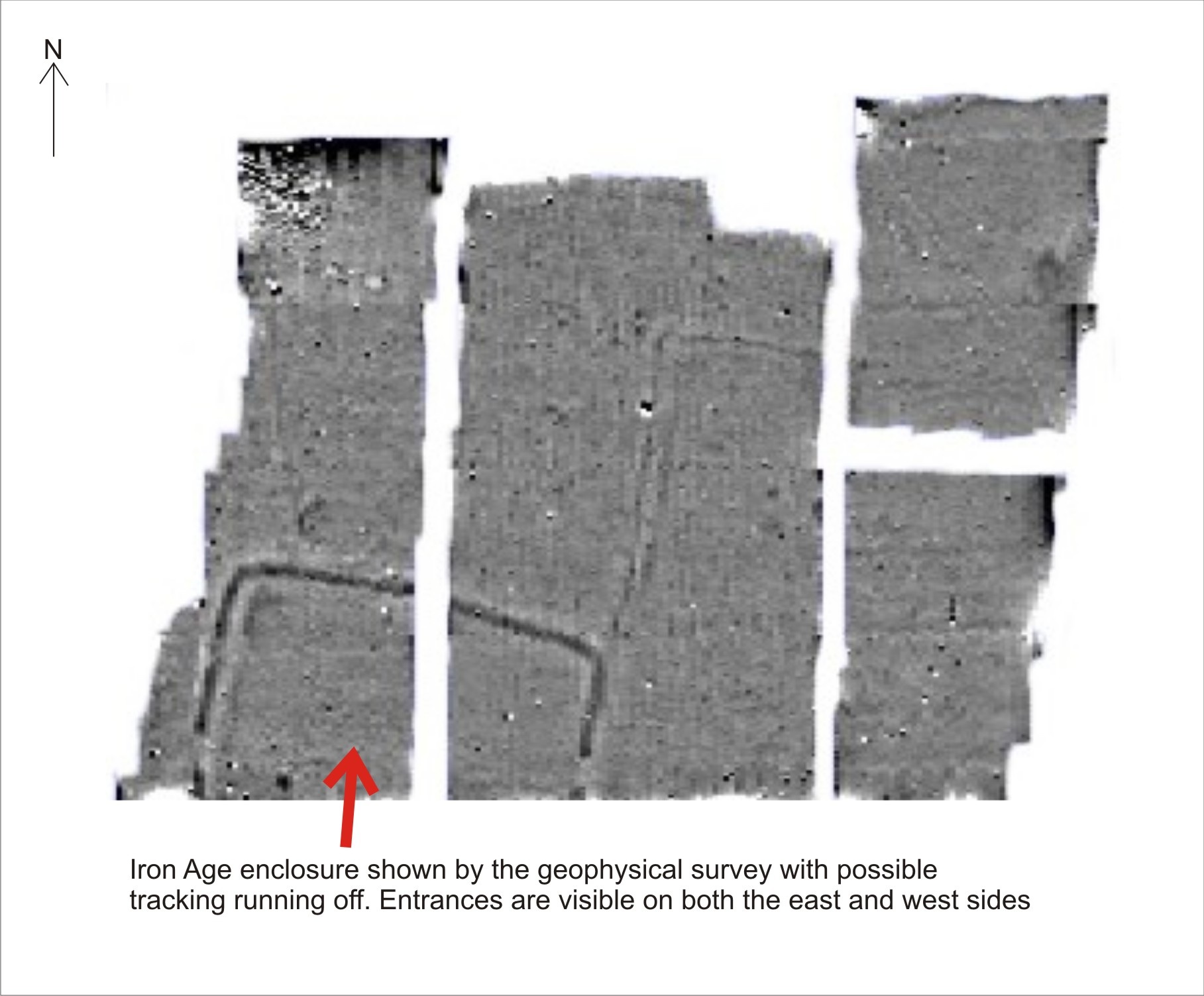
Yet the geophysical survey has caught the most attention. The results clearly show a rectangular ditched enclosure with opposing entrances to the east and west. It is believed to be Iron Age in date, and will form the focus of the excavation.

Karl Taylor of Archaeological Research Services said, ‘This discovery pushes back farming at Whirlow by at least 2,000 years and will provide new information on the early history of Sheffield’. As no farming settlements of this date have been found elsewhere within the city, this discovery could be highly significant.
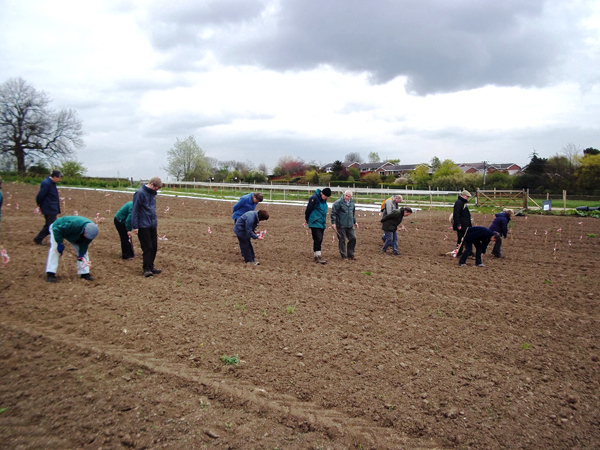
Fieldwalking 003 small News: Iron Age Heritage of Sheffield Farm
Volunteers fieldwalking for signs of Whirlow Farm’s past. Photo: Archaeological Research Services

The excavations begin during the Council for British Archaeology’s ‘Festival of British Archaeology’ and are certainly in the spirit of the event. Dorne Coggins, a volunteer said, ‘The project has given me a wonderful chance to experience a wide range of archaeological activities… and I can’t wait to take part in the excavation’.

The project will allow the Whirlow Hall Farm Trust to branch out, using the findings to create a programme of walks, talks, and a heritage trail. Jessika Sheppy of Archaeological Research Services hopes that these activities ‘will enable visitors and school groups to appreciate the history and importance of the site for many years to come’.- Jonathan Hutchings

from: http://www.archaeology.co.uk/news-features/iron-age-heritage-of-sheffield-farm.htm

Tuesday, 2 August 2011

News- Project to map ancient landscape of England may reveal burial grounds under your house (National)

The School of Archaeology at the University of Oxford is to compile a map of prehistoric England for the first time.

The 'Portal to the Past’ project will allow people to look online to discover the history of their own area over 3,500 years, from the Bronze Age in 1500BC to the Domesday Book in 1086.

Professor Chris Gosden, who is leading the project, said local history is one of the most popular internet searches after family ancestors.

However at the moment the parish records will only show up to around 1,000 years ago.

The five year project, funded by £1.8 million from the European Research Council, will bring together all the available data into a digital archive to create maps and as much information as possible about prehistoric England.

Prof Gosden said most modern day parishes are based on how the land was set out in Roman estates or even before then by peasant communities.

He said there could be metal works, ancient field systems, peasant huts, a Roman villa or even human bodies under modern buildings.

“We tend to look at surface of the world we live in but as soon as you look beneath the surface there will be a wealth of ancient features," he said.

Most of the data will be from English Heritage aerial photographs showing ancient sites of interest. There is also £100 million spent every year by developers carrying out archaeological research on sites before building work begins and private research by museums and individuals.

Material will also be drawn from county archives, databases of ancient coins, and the Portable Antiquity Scheme (which records the archaeological finds made by metal detectors). Oxford researchers will work with the British Museum, the Archaeology Data Service and local history experts with a good knowledge of the period.

Prof Gosden said bringing all the information about ancient England into one website will reveal where the landscape has developed and indeed, stayed the same.

Access to maps and databases on artefacts may also help budding archaeologists or even treasure hunters to find more.

“England is extraordinary in the level of potential information about the ancient landscape,” he said.

“We hope this project will provide an in-depth analysis of the whole of England, so we can glean new insights into how the landscape has changed and developed. We want to discover what this huge database of information on ancient sites can reveal about England at a national level. Until now we have had fragments of information about landscape use during this period but this project allows us to form a bigger picture of overall patterns and regional variations within England."

The Portal to the Past website is expected to go live in 2014. It will be available through the University of Oxford School of Archaeology website at http://www.arch.ox.ac.uk/


Tuesday, 12 July 2011

Dig - Volunteers unearth evidence of Iron Age settlement in Yorkshire city (Sheffield)

Evidence of human activity dating back to Roman times has been found at a city farm as part of a volunteer-led archaeology study.

Experts believe the survey has unearthed remains of an Iron Age or Romano-British settlement at Whirlow Hall Farm in Sheffield, and the discovery has caused considerable excitement.

A rectangular enclosure formed by a ditch was revealed during a geophysical survey commissioned as part of a Lottery-funded project at the site.

Karl Taylor of Archaeological Research Services, which undertook the survey, said the discovery could be hugely significant as no other settlements of such an early date have been found within the city.

He added: “The results of the survey go to show just how valuable geophysics can be as a tool for discovering archaeology that would otherwise have lain undetected. This discovery pushes back farming at Whirlow by at least 2,000 years and will provide new information on Sheffield’s early history.”

Excavations on the enclosure are due to start later this month, with volunteers carrying out much of the work under the guidance of trained archaeologists.

A series of field walks have also been organised as part of the Whirlow Hall project which began in April.

Those walks have yielded a collection of more than 1,000 finds including flint tools from the Mesolithic and Early Bronze Age.

Staff at Whirlow Hall farm said once the project was complete, all the findings would be used to create a heritage trail and a programme of walks and talks detailing the area’s history.

Anybody interested in volunteering on the dig should call Archaeological Research Services on 01629 814540.


Friday, 25 February 2011

News - Third haul for treasure hunter (Newark)

Treasure-trove hunter Mr Maurice Richardson has unearthed his third haul.
 
Mr Richardson found a cache of Bronze Age tools buried in a field eight miles from Newark.

He found them by accidentally wandering off a track while completely immersed searching with his metal detector.

Mr Richardson, who lives in Newark, made the find while examining a field owned by a farmer he met through his tree surgery business.

The cache includes several well-preserved socket axe handles, chisels, a spear head, broken sections of swords, and unmoulded clumps of bronze.

It is believed they once belonged to a Bronze Age blacksmith with a travelling foundry who would have toured from settlement to settlement forging weapons and tools and collecting broken ones to be re-smelt into serviceable replacements.

Bronze was worth as much as gold is today and was also very heavy so smithies, fearing they could be robbed, would bury stashes near recognisable markers along their well-travelled routes and dig them up when passing by.

Mr Richardson believes this cache remained in the ground because something happened to alter the landscape between the blacksmith’s visits or, that he died before retrieving them.

“Three thousand years ago bronze would have been difficult to obtain. The tin could only come from the mines in Cornwall and the copper from Ireland,” said Mr Richardson.

“This represents the first step up from the use of flints. It was the first use of metals. Some of these items are incredible and very well preserved.

“I only found them after I wandered off the path. My head was down concentrating and then the detector went off. It was a complete accident.

“I have no idea what they are worth or whether they hold any value more than their historical worth.”

Mr Richardson sent the find to the Portable Antiques Scheme. It will then go on to the British Museum to be assessed, dated and valued.

In addition to the Bronze Age items, he found Roman brooches and around 70 coins dating from 40-48BC as well as floor tiles from a Roman villa known to have been built on the site.

If the cache is declared treasure trove, Mr Richardson will split half of its worth with the landowner and the pieces will likely be exhibited locally or nationally.

An earlier find by Mr Richardson, a 2,100-year-old torc valued at £350,000, is exhibited in the British Museum.

He also found 200 pieces of medieval, Saxon and Roman pieces in a field two miles from Newark last year.